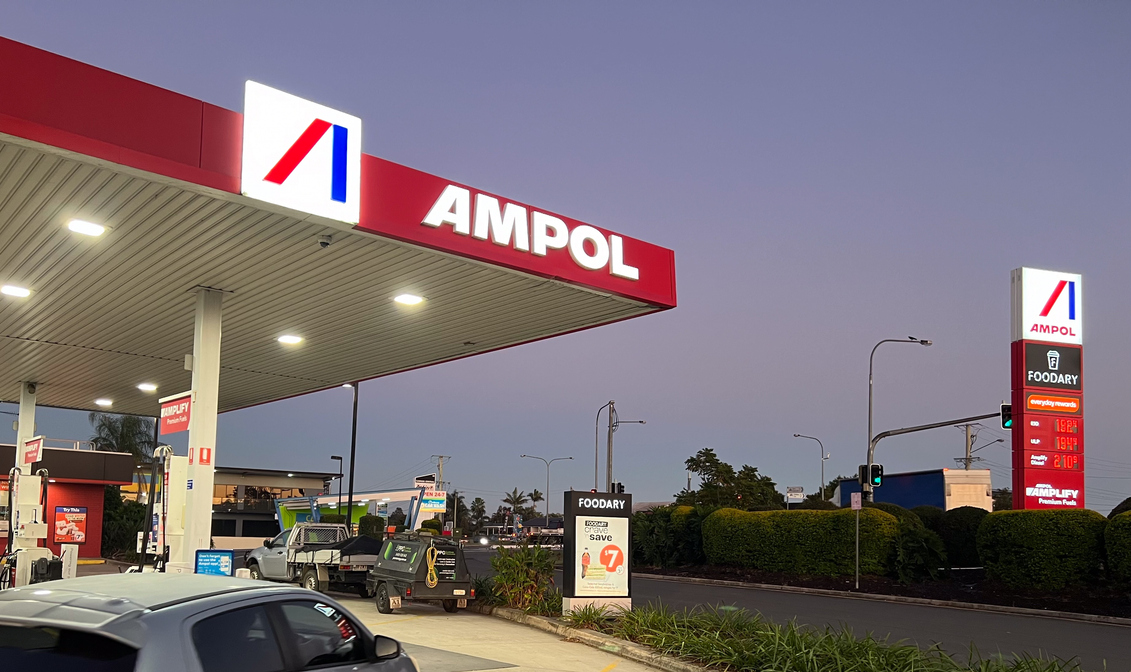
Ampol is Australia's largest fuel refiner and distributor, playing a critical role in supplying fuel to Australian consumers and industries. While Ampol is widely recognised for its national convenience retail network, we believe the market underappreciates the strategic value of their Lytton refinery asset. Lytton is one of only two remaining refineries in Australia. While the recent Iran conflict has drawn attention to the importance of fuel security in Australia, we see the real catalyst for value realisation sitting not in the headlines themselves, but in the evolving policy discussions that underpin Lytton's long-term earnings.
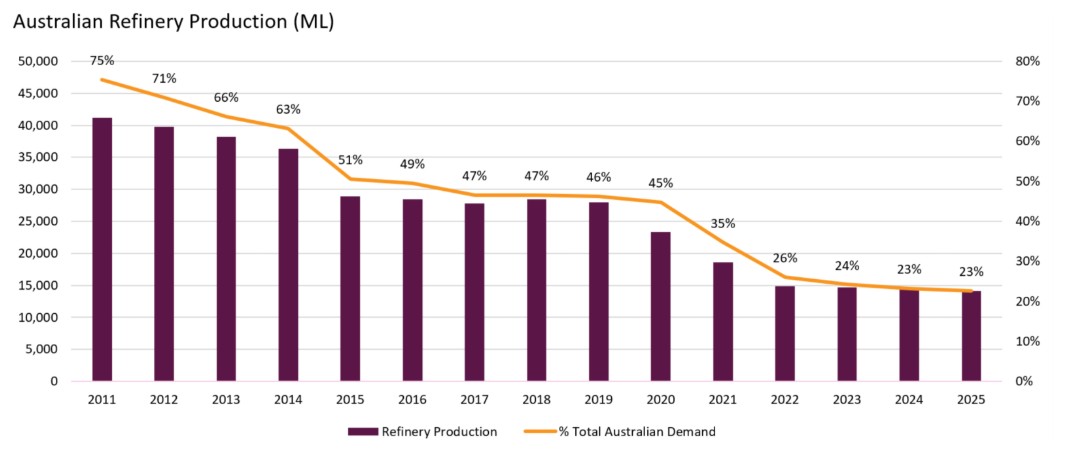
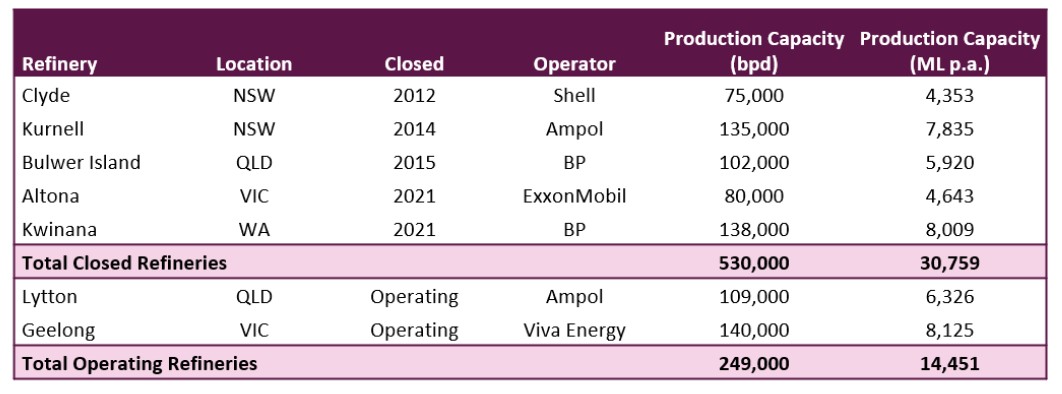
Australia's refining capacity has deteriorated dramatically over the past 15 years. In 2011, the country operated seven refineries, supplying around 75% of domestic fuel demand. Today, only two refineries remain, these being Ampol's Lytton Refinery in Brisbane and Viva Energy's Geelong Refinery. Combined, these refineries meet just 20% of Australia's fuel needs. The balance of fuel is imported as refined product, predominantly from South Korea, Singapore, Malaysia, China and Japan. As Australia has shifted from refining self-sufficiency to import dependence, the strategic value of these last two refineries has grown considerably, given their role in national fuel security.
Source: Australian Petroleum Statistics
Source: Australian Petroleum Statistics
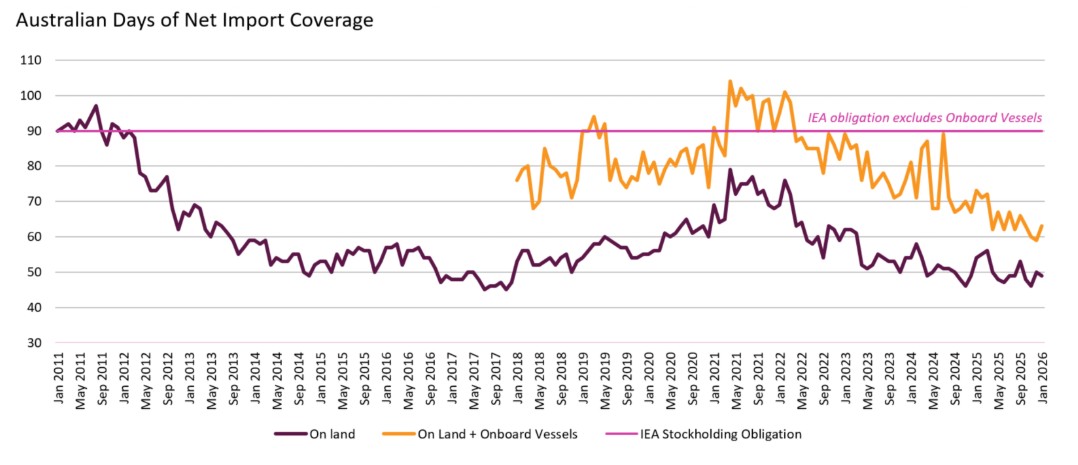
The outbreak of the war against Iran and subsequent closure of the Strait of Hormuz triggered a major global supply disruption. Notably, Ampol does not use Middle Eastern crude oil, yet the cascading effects on Asian refining production and product flows still materially affected supply chains into Australia. With Australia's fuel stockholdings well below the IEA's 90-day requirement, concerns around supply security were heightened.
Source: Australian Petroleum Statistics
Ampol is Australia's largest fuel refiner and distributor, playing a critical role in supplying fuel to Australian consumers and industries. While Ampol is widely recognised for its national convenience retail network, we believe the market underappreciates the strategic value of their Lytton refinery asset. Lytton is one of only two remaining refineries in Australia. While the recent Iran conflict has drawn attention to the importance of fuel security in Australia, we see the real catalyst for value realisation sitting not in the headlines themselves, but in the evolving policy discussions that underpin Lytton's long-term earnings.
Australia's refining capacity has deteriorated dramatically over the past 15 years. In 2011, the country operated seven refineries, supplying around 75% of domestic fuel demand. Today, only two refineries remain, these being Ampol's Lytton Refinery in Brisbane and Viva Energy's Geelong Refinery. Combined, these refineries meet just 20% of Australia's fuel needs. The balance of fuel is imported as refined product, predominantly from South Korea, Singapore, Malaysia, China and Japan. As Australia has shifted from refining self-sufficiency to import dependence, the strategic value of these last two refineries has grown considerably, given their role in national fuel security.
On a regulated basis, we estimate Lytton's value at $1.5–2.0 billion, compared to our estimate of the market's current implied valuation of less than $1.0 billion. This gap implies $3–$5 per share of incremental value to Ampol's current share price from the Lytton re-rate alone, before considering further upside from the EG Group acquisition and the rollout of U-GO conversions across the convenience retail network.
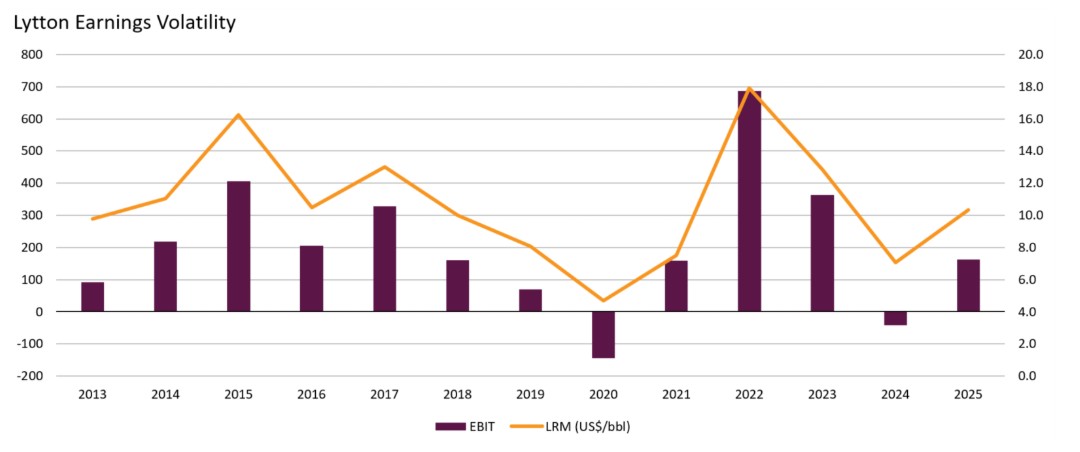
Source: Ampol Annual Reports
David Meehan
Equities Analyst